Why Should I Care About
Condensed Matter Physics?

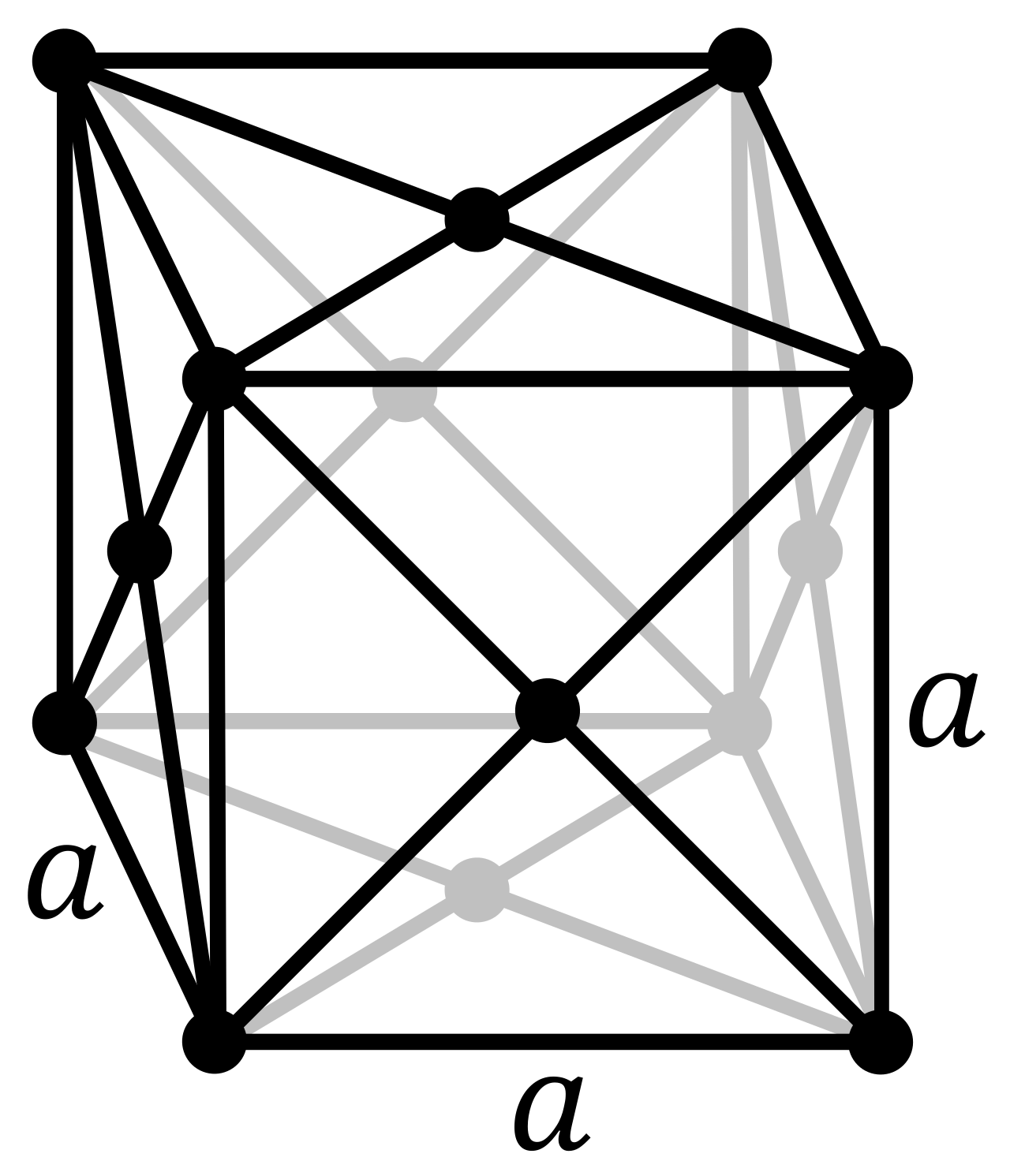
Figure 0 — The Fermi surface of copper, visualised. Ordinary matter, extraordinary structure.
The Question Nobody Asks
There is a strange asymmetry in how physics gets taught and talked about publicly. Ask someone which branch of physics is the most exciting, and you will almost always hear particle physics, cosmology, or quantum gravity. Nobody ever says condensed matter. And yet condensed matter physics is, by almost any concrete measure you care about, the largest and richest field in all of physics: more practitioners, more Nobel prizes per decade, greater technological impact, and a denser collection of genuinely open problems than any other subfield.
This essay is my attempt to answer a question friends from other disciplines ask me occasionally: why do you care about stuff? Not the universe at large, not the elementary particles, just ordinary matter. Wood, water, copper, superconductors at four kelvin. Why is this worth a physicist's attention?
1023 atoms, one pattern
The short answer is emergence. The longer answer is that condensed matter physics is where the most profound questions about what quantum mechanics actually means get settled experimentally, not in a particle accelerator, but in a lump of metal cooled to a few millikelvin in a dilution refrigerator sitting in somebody's basement lab.
Let me try to explain what I mean carefully, without assuming anything beyond a first course in physics.
More is Different
In 1972, Philip Anderson, one of the great condensed matter physicists of the twentieth century, published a short essay in Science with the title "More is Different." It is, in my view, one of the most important pieces of scientific writing of the last hundred years, and it runs to about four pages. The argument is simple to state and surprisingly hard to fully absorb.
"At each level of complexity, entirely new properties appear, and the understanding of the new behaviors requires research which I think is as fundamental in its nature as any other."
Philip W. Anderson, "More is Different" (1972)Anderson's point was this: the reductionist program, the idea that if you know the laws governing the smallest constituents of matter you can in principle deduce everything, is, in a very precise sense, wrong. Not because the laws break down at larger scales. But because genuinely new laws emerge, laws that are not deducible from those at the level below, even in principle, without invoking radically different concepts.

Consider water. Each water molecule obeys the Schrodinger equation. But wetness, the property of being wet, is not a property of a single molecule. It does not even make sense to ask whether one H2O molecule is wet. Wetness is a collective, emergent property of roughly 1023 molecules interacting together. The same goes for hardness, transparency, superconductivity, magnetism, and essentially every property of matter that shows up in everyday life or in technology.
Condensed matter physics is, at its core, the physics of emergence: not the study of individual particles, but of the vast collective behaviors that arise when quantum particles are assembled in enormous numbers and allowed to interact.
Topology and the Unexpected
This is where things get genuinely surprising.For most of the twentieth century, the classification of phases of matter, solid, liquid, gas, magnet, superconductor, and so on, was understood through a framework assembled by Lev Landau in the 1930s. The central concept was spontaneous symmetry breaking: a magnet breaks the rotational symmetry of space by picking a preferred direction; a crystal breaks translational symmetry by arranging atoms periodically. Each phase was characterised by an order parameter, a quantity that is zero in the disordered phase and nonzero in the ordered one.
In the 1980s, something happened that nobody had anticipated. The discovery of the quantum Hall effect revealed that matter could exist in phases that were entirely outside Landau's classification: phases distinguished not by any broken symmetry, not by any local order parameter, but by a global, topological property of the quantum state of the electrons.
The Hall conductance in these systems is quantised. The precise statement is:
The ratio of transverse current to applied voltage is quantised to one part in 109, far more precisely than almost anything else measurable in a solid-state system. This precision is not accidental. The integer $\nu$ turns out to be the Chern number of the occupied electron bands, a topological invariant borrowed directly from differential geometry. It cannot change continuously; it can only jump by integers. And because it is topological, it is immune to disorder, impurities, and small perturbations.

What does it mean physically for a phase of matter to be "topological"? The rough idea is this: the global structure of the quantum wavefunction across the whole material matters, not just what is happening locally at any one point. A topological insulator, for example, is insulating in its bulk but supports perfectly conducting states on its surface. Those surface states are protected by topology: they cannot be removed by any local perturbation that does not close the bulk gap. The protection is as robust as the mathematical difference between a sphere and a torus; you cannot deform one into the other without tearing.
Why Should You Care?
At this point, a reasonable person might ask: this is all beautiful, but why should someone who does not plan to be a physicist care? I want to give three answers at different levels, because I think the question deserves more than one kind of answer.
Technologically. Every electronic device you own is a product of condensed matter physics. The transistor, the laser, the LED display, the MRI machine, the lithium-ion battery, the solar cell: all of these emerged from an understanding of how quantum mechanics operates in real materials. The study of topological phases, barely forty years old as a field, is already pointing toward dissipationless electronics, topological qubits, and new classes of sensors. The translation from fundamental insight to usable technology in condensed matter has historically been fast, often startlingly so.

Intellectually. Condensed matter is where most of the deep conceptual action in modern physics actually happens, even if particle physics gets most of the public attention. Renormalisation, effective field theory, spontaneous symmetry breaking, anomalies, topological invariants: these ideas were developed or substantially sharpened in the context of condensed matter systems, and many were later exported to high-energy physics, not imported from it. The theoretical tools used at CERN and the theoretical tools used to understand a superconductor share a common ancestry, and the traffic of ideas has frequently run from the lab bench to the accelerator rather than the other way around.
Philosophically. If you care about what the world is fundamentally made of, condensed matter is where the most surprising answers show up. Quasiparticles, collective excitations that behave like particles with fractional electric charge or non-Abelian exchange statistics, exist only in strongly correlated many-body systems. The fractional quantum Hall state supports excitations with charge $e/3$. These are not elementary particles in any standard sense, but they are physically real, experimentally measurable, and genuinely strange. The moral is that "what things are made of" is a more subtle question than it first appears, and matter has more to say on the subject than particles do.
A Personal Note
I came to condensed matter somewhat sideways. As a second-year undergraduate I started reading about topological insulators, initially because someone mentioned them in a talk, and found I could not stop. What pulled me in was the feeling that the field sits at an unusual intersection of things I find beautiful separately: the rigour of algebraic topology and K-theory, the physical intuition required to think about electrons in a lattice, and the directness of the connection to experiments you can actually run in a lab on a table.
The first time I computed a Chern number I genuinely felt like I had found something. Even knowing it had been known for 40 years.My own current work is on the decoherence of topological edge modes. The question is: how do the protected surface states of a topological material actually lose their quantum coherence when the material is coupled to a thermal environment? It is a practical question in one sense, because topological protection is only useful if it survives long enough to be exploited. But it is also, I think, a window into something deeper about the relationship between topology, quantum mechanics, and the dissipative world we actually live in. The interplay between robustness and fragility in these systems turns out to be richer than the simple "topologically protected" slogan suggests.
If this has made you curious and you want to go further, I would point you first to Anderson's original essay, which is freely available and still worth reading carefully. For the topology, Charles Kane's lecture notes from the Les Houches summer school are an excellent starting point; they assume some quantum mechanics but not much more. The mathematics is not trivial, but the physical ideas are accessible, and the payoff is a way of thinking about matter that feels, to me at least, genuinely new.